
MRI
Accurate and Safe Diagnosis of Internal Organs and the Cardiovascular System
Magnetic resonance imaging (MRI) is one of the most advanced methods of medical imaging, providing detailed images of organs, tissues, and blood vessels without the use of X-ray radiation. The examination helps detect diseases at early stages and determine an accurate diagnosis.
What MRI Is and Who It Is For
Magnetic resonance imaging is a non-invasive diagnostic method that uses a strong magnetic field and radio waves to produce layer-by-layer images of internal organs and tissues. Thanks to its high level of detail, MRI allows assessment of organ structure, detection of pathological changes, and determination of disease stage.
The method is widely used to examine:
- The heart and blood vessels
- The brain
- The spine and spinal cord
- Joints and soft tissues
- Abdominal organs
- The vascular system
MRI is particularly important in cardiology — it allows assessment of myocardial structure, valve function, and vessel condition, and helps detect cardiac pathologies, including cardiomyopathies, heart defects, or aneurysms.
How to Prepare for an MRI?
In most cases, no special preparation is required for an MRI. However, before the examination, it is important to inform your doctor about any implants, electronic devices, or metal objects in your body, as the strong magnetic field may interact with them.
What You Need to Know Before the Examination
-
Documents
Passport, doctor's referral, previous examination results
-
Clothing
Without metal elements
-
Food
In most cases you may eat, unless your doctor advises otherwise
-
Metal objects
Before the examination, remove jewelry, watches, glasses, and hearing aids
-
Implants
Be sure to inform your doctor about pacemakers, metal prostheses, or other medical devices


If a contrast-enhanced examination is planned, your doctor may provide additional preparation instructions.
Indications and contraindications

Indications for surgery
In the presence of signs or symptoms indicating the presence or development of conditions such as:
- Cardiomyopathies: dilated (DCM), hypertrophic (HCM), non-compaction, arrhythmogenic right ventricular dysplasia (ARVD)
- Myocarditis and other inflammatory diseases (pericarditis)
- Ischemic heart disease, to determine fibrotic changes and myocardial viability after a prior myocardial infarction
- After heart transplantation, to assess graft condition and detect signs of rejection
- Storage diseases: amyloidosis, sarcoidosis, Fabry disease, and others
- Cardiac tumors

Contraindications
- Implanted devices for supporting and controlling heart rhythm (MRI-incompatible pacemakers)
- Cochlear implants
- Metal pins, screws, plates, stents, or surgical staples if made of ferromagnetic (non-titanium) materials
- Presence of bullets, shot, fragments, or other metal objects in the body
- First trimester of pregnancy
How the MRI Procedure Works
MRI is a painless procedure that usually takes 20 to 40 minutes, depending on the type of examination.
-
Arrival
The patient arrives at the clinic in advance to complete registration and fill out a safety questionnaire.
-
Registration
Medical staff confirm information about the patient's health, possible contraindications, and previous examinations.
-
Examination
During the examination, the patient must lie still to obtain clear images.
-
Results
After the examination is complete, a radiologist analyzes the resulting images and prepares a report.
Equipment
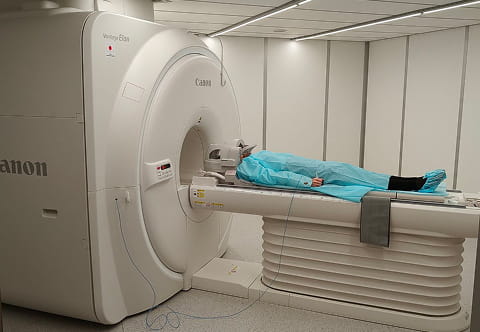
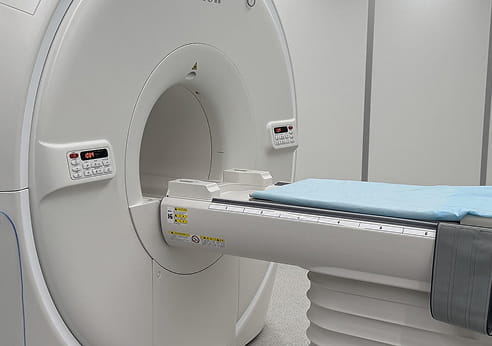
The department uses a Canon Vantage Elan 1.5T magnetic resonance scanner, which provides high-precision diagnosis of cardiovascular system pathologies.
Key Equipment Specifications
- 1.5 Tesla magnetic field — the standard for modern clinical MRI diagnostics
- High image resolution
- Ability to perform detailed examination of the heart and blood vessels
- Modern scanning protocols
Advantages of Examination at the Heart Institute
-
Expert cardiac diagnostics
The Heart Institute specializes in the treatment and study of cardiovascular diseases.
-
Modern equipment
An advanced expert-class scanner is used.
-
Comprehensive diagnostics
The clinic offers a range of examination methods: MRI, CT, X-ray, and other types of radiological diagnostics.


